6 Best Enterprise Proxies in 2026
Enterprise proxy infrastructure has become increasingly important as businesses expand AI data collection, competitor intelligence, ecommerce monitoring, and large-scale public web research. Organizations gather data across search engines, marketplaces, retailer websites, and advertising platforms to support pricing decisions, SEO strategies, automation, and market analysis.
McKinsey’s global AI survey found that 88% of organizations now use AI in at least one business function. As AI adoption continues to grow, businesses need reliable infrastructure to collect and validate public web data across multiple regions and digital environments. This guide compares the 6 best enterprise proxy providers and explains which features matter most when selecting enterprise-grade proxy infrastructure.
Enterprise proxies are professional proxy networks built to support large organizations that require reliable, scalable, and secure access to public web data. Unlike consumer proxy services, enterprise solutions prioritize infrastructure stability, high-quality IP pools, flexible session management, advanced geo-targeting, and enterprise-grade support.
Most enterprise providers combine residential, mobile, ISP, and datacenter proxies with API integrations, authentication controls, and scalable routing infrastructure. This allows businesses to collect public data continuously while supporting multiple teams, automated systems, and international monitoring projects.
Enterprise proxies route business traffic through large proxy networks instead of sending requests directly from a company’s own IP addresses. This allows organizations to collect public web data from multiple locations while supporting recurring monitoring, automation, and large-scale research projects.
Enterprise providers operate distributed proxy networks that balance traffic across thousands or millions of IP addresses. This infrastructure helps businesses maintain reliable access when monitoring competitors across multiple websites and regions.
Residential proxies use real household IP addresses and work well for e-commerce monitoring, competitor research, and localized browsing. Mobile proxies use carrier-assigned IPs that are useful for mobile-specific research and app testing, while datacenter proxies provide high-speed connections for larger scraping workloads.
Rotating proxies automatically assign different IP addresses over time to distribute requests more naturally across target websites. Sticky sessions keep the same IP for longer periods, making them useful for account-based tasks, multi-step workflows, and recurring competitor monitoring.
Enterprise proxy providers allow businesses to choose IP addresses by country, city, region, ISP, or ASN. This makes it possible to collect localized pricing, search results, advertisements, and marketplace data that accurately reflects what users see in specific markets.
Instead of concentrating requests through a single IP address, enterprise proxy infrastructure distributes traffic across larger proxy pools. This helps organizations scale data collection while supporting multiple users, automation systems, and monitoring workflows simultaneously.
Businesses use enterprise proxies to collect public web data at scale, monitor prices and SEO results across locations, verify ads, and protect brands across marketplaces. They are especially useful for AI data collection, large-scale scraping, price intelligence, localized SERP tracking, ad verification, and detecting counterfeit or unauthorized seller activity.
Enterprise proxy providers differ by infrastructure, targeting depth, session control, and enterprise workload fit. The table below compares the best options for AI data collection, web scraping, SEO monitoring, pricing intelligence, and competitor research.
| Provider | Enterprise Infrastructure | Enterprise Strength | Best Enterprise Workloads | Starting Price |
| 1. Live Proxies | Residential & Mobile Enterprise Network | Private IP allocation, sticky sessions, enterprise routing | Recurring AI data collection, ecommerce intelligence, SEO monitoring, and competitor research | From $70/month |
| 2. Oxylabs | Residential, Mobile, ISP & Datacenter | Large enterprise ecosystem | Public data collection, AI, scraping | From $30/month |
| 3. SOAX | Residential, Mobile & Datacenter | Advanced geo-targeting | Localized monitoring, SEO, and pricing | From $90/month |
| 4. Decodo | Residential, Mobile, ISP & Datacenter | Automation-friendly infrastructure | Scraping, AI, monitoring | From $3.75/GB |
| 5. Rayobyte | Residential, ISP & Datacenter | Scalable proxy infrastructure | Scraping, e-commerce, public data | Varies by product |
| 6. ProxyEmpire | Residential & Mobile | Flexible international coverage | Global competitor monitoring | From $7/GB |
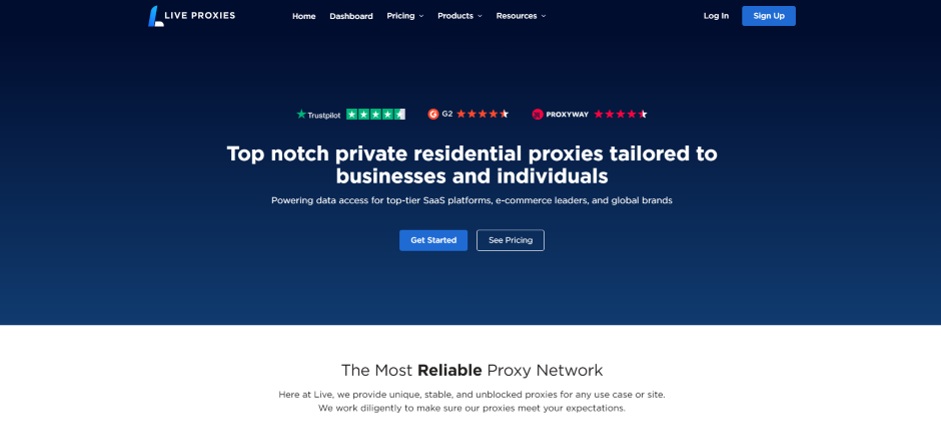
Live Proxies is built for organizations that require enterprise-grade proxy infrastructure and a reliable rotating IP proxy solution for recurring competitor intelligence, AI data collection, ecommerce monitoring, and public web data collection. As a provider of enterprise proxies, the platform combines rotating residential proxies, rotating mobile proxies, private IP allocation, sticky sessions up to 24 hours, country, city, and ASN targeting, and coverage across 55 countries, with strong availability in the United States, Canada, and the United Kingdom. This makes Live Proxies especially useful for organizations that need controlled IP allocation, stable routing, long session continuity, and scalable infrastructure for repeatable data operations.
Live Proxies is well-suited for organizations that rely on recurring competitor intelligence, AI data collection, SEO monitoring, e-commerce research, and large-scale public web data collection. Its enterprise infrastructure supports long-term automation, localized market analysis, price intelligence, marketplace monitoring, and other data-driven workflows that require reliable, scalable, and consistent proxy performance.
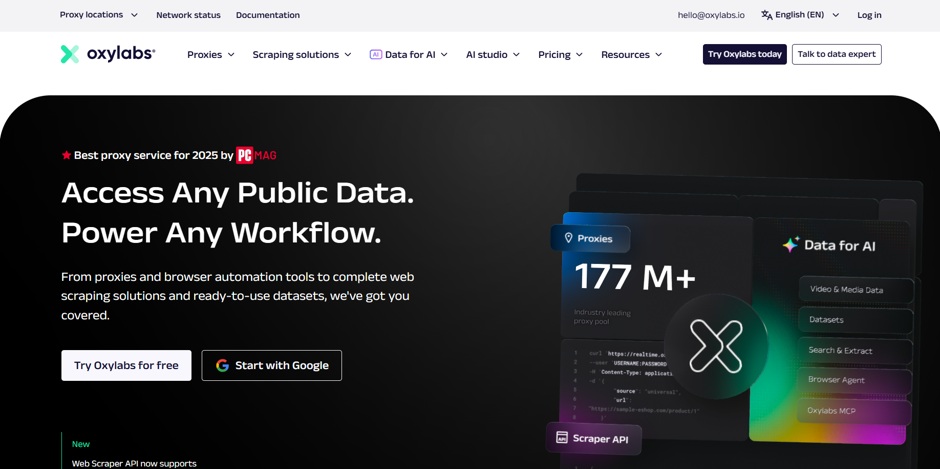
Oxylabs is built for enterprises that require large-scale public data collection, advanced automation, and recurring competitor research across multiple markets. The platform combines residential, mobile, ISP, and datacenter proxies with browser automation tools, Web Unblocker technology, and enterprise APIs to support high-volume data collection across websites, marketplaces, search engines, and dynamic web applications. Its infrastructure is designed for organizations that need scalable data operations, reliable access, and consistent performance across long-term monitoring and research projects.
Oxylabs works for organizations that need enterprise-scale infrastructure for competitor intelligence, AI data collection, e-commerce monitoring, large-scale scraping, and public data extraction. Its ecosystem supports high-volume workflows that require global access, browser automation, and stable data collection across complex target markets.
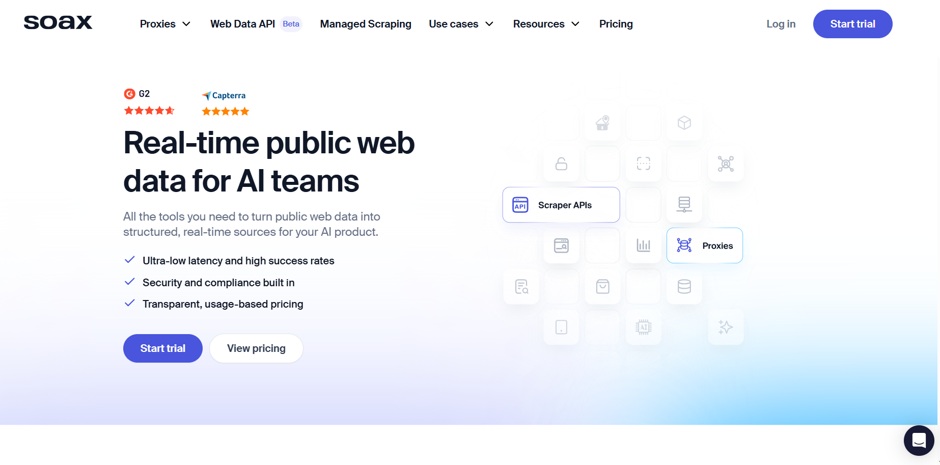
SOAX is designed for organizations that depend on accurate geo-targeting, flexible session management, and localized data collection. The platform offers residential, mobile, and US datacenter proxies with precise location controls, helping businesses collect competitor intelligence across countries, cities, ISPs, and mobile carriers. Its infrastructure is especially useful for SEO monitoring, regional price tracking, marketplace research, ad verification, and other workflows where location accuracy directly affects data quality.
SOAX fits teams that need location-specific data collection across search, ecommerce, marketplaces, and advertising environments. Its targeting options make it useful for checking how competitors, prices, rankings, and campaigns appear in different countries, cities, ISPs, and mobile networks.
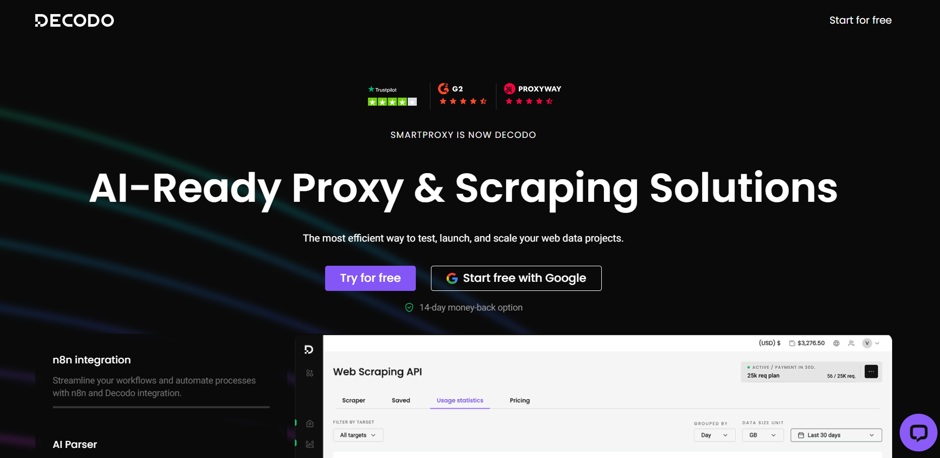
Decodo provides enterprise-ready proxy infrastructure for automation, public data collection, and recurring monitoring across multiple digital channels. The platform combines residential, mobile, ISP, static residential, and datacenter proxies with automation-friendly APIs and flexible session controls. This makes it useful for business intelligence workflows that require repeatable data collection, localized access, and integration with internal systems.
Decodo works for teams that need automated competitor tracking, AI data collection, localized pricing checks, SEO research, and marketplace monitoring. Its infrastructure helps businesses run repeatable data workflows across multiple regions, platforms, and internal systems.
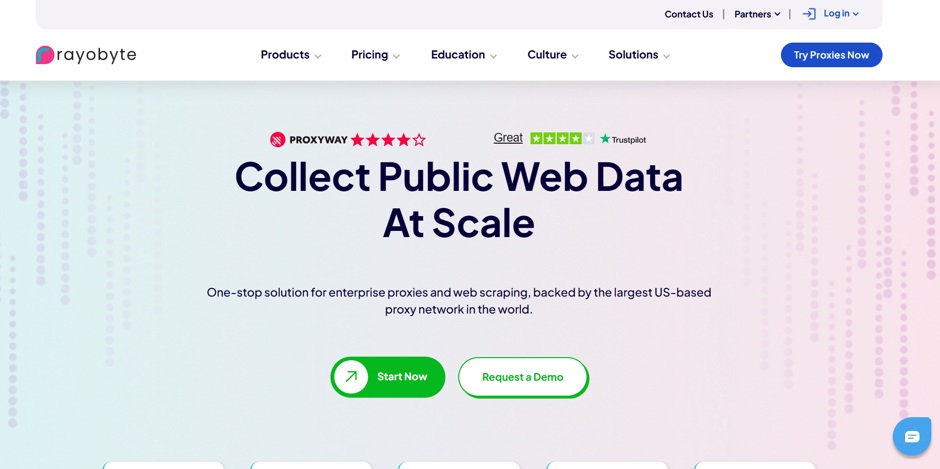
Rayobyte is built for organizations that need scalable proxy infrastructure for enterprise web scraping, e-commerce monitoring, and public data collection across larger target sets. Its residential, ISP, datacenter, and mobile proxy products help businesses collect competitor intelligence, monitor marketplaces, track SERP data, and support recurring automation. The platform is useful for teams that need broad proxy-type coverage, stable routing, and reliable long-term performance for high-volume data workflows.
Rayobyte is a strong option for enterprise web scraping, e-commerce monitoring, competitor intelligence, SERP collection, and large public data projects. Its infrastructure is useful for businesses that need consistent routing, broad proxy coverage, and steady performance across high-volume workflows.
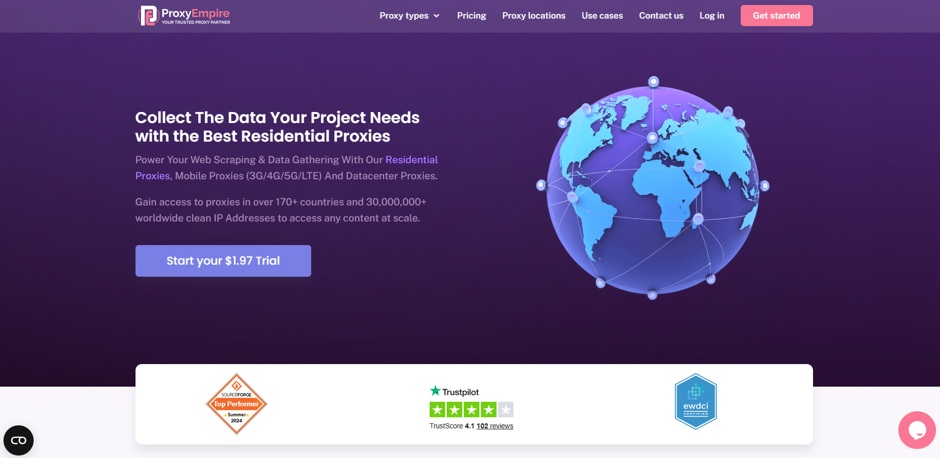
ProxyEmpire is designed for organizations that require international proxy coverage, flexible targeting, and reliable session management for recurring data workflows. The platform combines residential and mobile proxies with country, city, ISP, and ASN targeting, helping businesses collect localized competitor intelligence across multiple geographic markets. Its session controls and broad geo-targeting options make it useful for price monitoring, market research, ad verification, SEO tracking, and other workflows where stable access and location accuracy are important.
ProxyEmpire is well-suited for businesses conducting international competitor intelligence, cross-market price tracking, marketplace monitoring, mobile research, and regional ad verification. Its flexible geo-targeting and session controls support organizations collecting localized data across multiple countries.
The best enterprise proxy platforms offer more than large IP pools. Businesses should focus on infrastructure quality, targeting depth, session control, scalability, and support because these factors directly affect reliability at scale.
Enterprise proxies are built for scale, automation, targeting, and team workflows. Residential proxies are mainly for real household IP access. Enterprise proxies fit large scraping, AI data, and competitor monitoring; residential proxies fit smaller, localized tasks.
Enterprise proxies are designed for organizations that require scalable infrastructure, centralized management, API integrations, advanced geo-targeting, and support for recurring business operations. They often combine multiple proxy types into a single platform and provide features for larger teams and automation systems.
Residential proxies focus primarily on providing access through real household IP addresses. They are highly effective for localized browsing, ecommerce monitoring, SEO research, and public data collection, but may not include the broader management features available with enterprise platforms.
Enterprise proxies are generally the better choice for organizations running large monitoring programs, AI data collection, public web scraping, or recurring competitor intelligence across multiple regions. Residential-only solutions may be sufficient for smaller projects or businesses with lower traffic requirements.
Enterprise proxy providers invest in security, compliance, and infrastructure management to support reliable long-term business operations and continuous data collection at scale. Most platforms include secure authentication, access controls, compliance practices, and network monitoring to help protect enterprise workflows.
The best enterprise proxies are not defined only by the size of their IP pools. Strong enterprise infrastructure also depends on IP quality, targeting depth, session control, routing stability, API flexibility, and the ability to support repeatable business workflows across multiple teams, regions, and data sources.
For competitor intelligence, AI data collection, ecommerce monitoring, SEO research, ad verification, and large-scale web scraping, businesses should choose a proxy infrastructure that matches the workflow, not just the largest network claim. The strongest enterprise proxy setup combines reliable IPs, flexible rotation, sticky sessions, accurate geo-targeting, stable routing, and scalable management for long-term data operations.
Build a professional consulting or corporate website with Alexi. Modern design, responsive layouts, and flexible customization—perfect for business, agency, and service websites.
